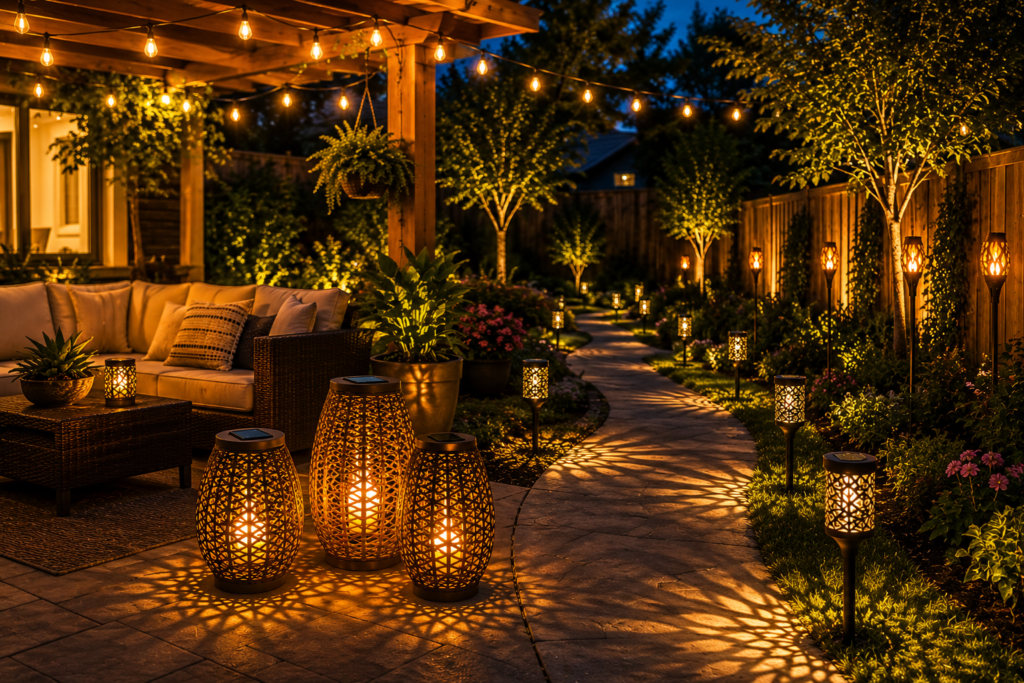
Backyard lighting can change the way an outdoor space feels after sunset. The right mix of soft ambient light, practical pathway lighting, and a few carefully placed accents can make a patio feel more welcoming without turning the yard into a brightly lit commercial space.
Whether you have a small suburban patio, a large lawn, a deck, or a covered pergola, the goal is the same: create enough light for comfort and safety while keeping the atmosphere warm and relaxing. These 25 backyard lighting ideas cover simple projects, budget-friendly options, entertaining spaces, landscaping, and smart ways to layer different types of outdoor light.
Quick tip: Start with the areas you actually use after dark—seating, steps, pathways, dining areas, and entrances. Then add decorative lighting where you want more personality. For additional guidance on efficient exterior lighting, see the U.S. Department of Energy’s exterior lighting guidance.
25 Backyard Lighting Ideas to Try
1. Drape String Lights Over a Seating Area
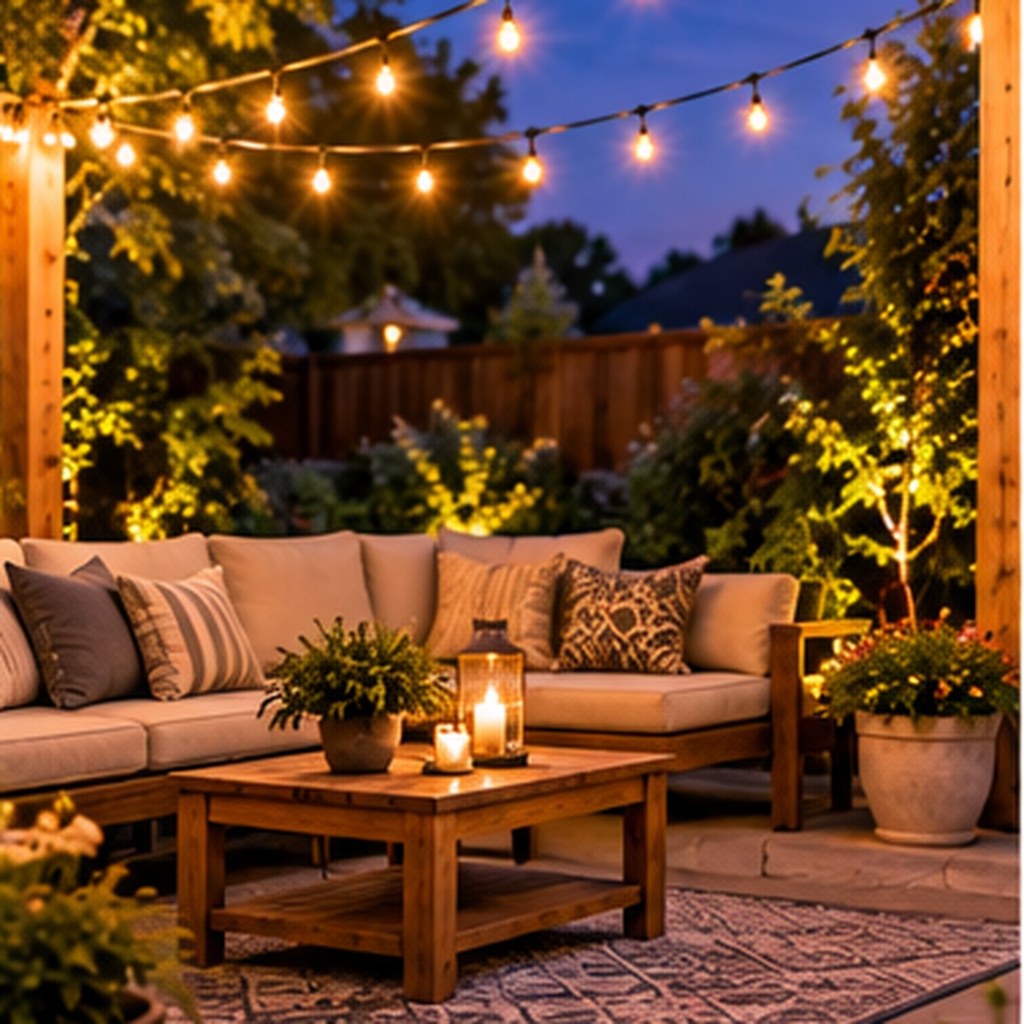
String lights are one of the easiest ways to create an inviting backyard atmosphere. Hang outdoor-rated strands between posts, along a pergola, or from sturdy structures above a seating area. Warm-white bulbs usually create a softer, more relaxed look than very cool white light.
Shop This Idea
Warm Outdoor String Lights with Remote
A direct match for creating a warm overhead glow across a patio, pergola, or backyard seating area.
View on Amazon → (paid link)
2. Add Solar Pathway Lights
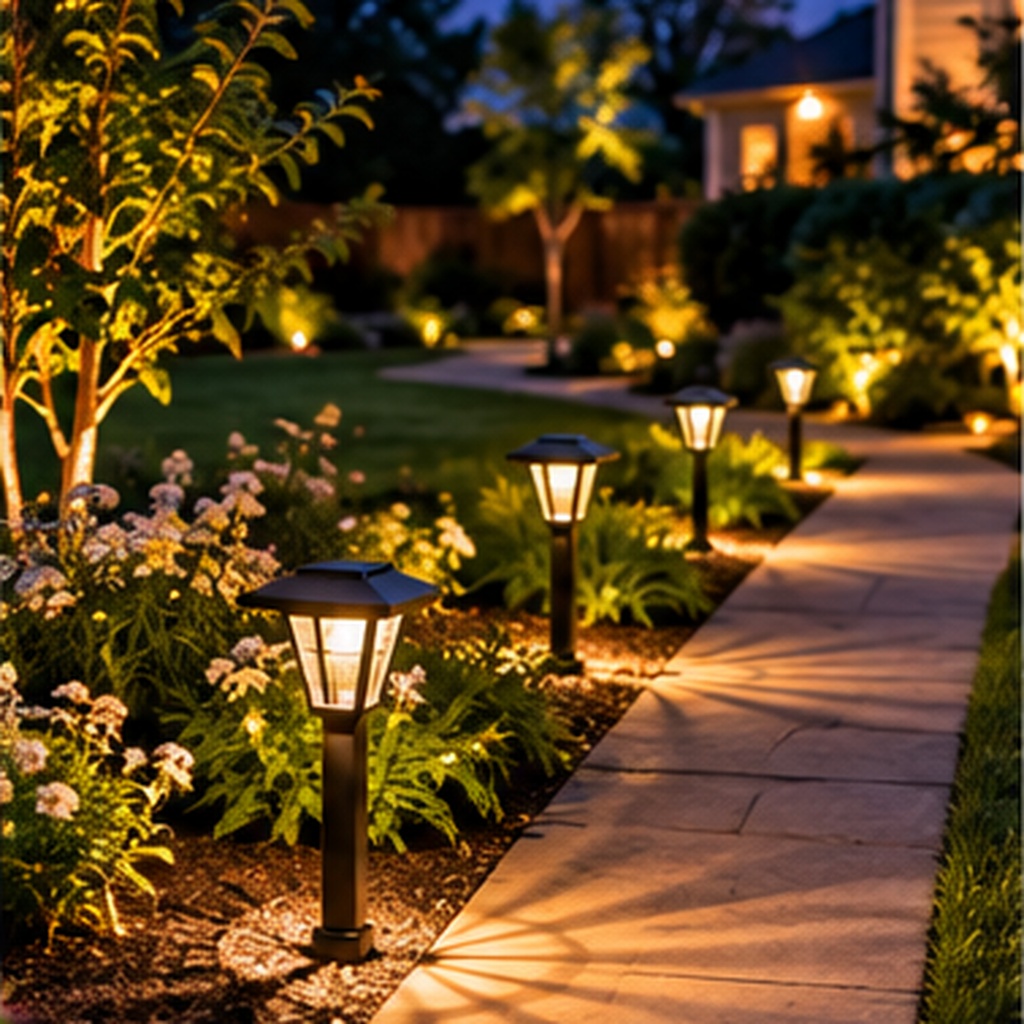
Solar pathway lights are useful for both appearance and navigation. Place them along walkways, garden edges, or the route from the patio to the house. Choose a consistent style and space the lights evenly so the pathway looks intentional rather than cluttered.
Shop This Idea
BITPOTT Solar Garden Lights — 12 Pack, Warm White
These modern solar pathway lights provide a warm-white glow for walkways, garden edges, and backyard paths, with an outdoor weather-resistant design and no wiring required.
View on Amazon → (paid link)
3. Create a Fire-Pit Glow
If your backyard already has a fire pit, use subtle surrounding lights instead of competing with the fire itself. A few low lights around the seating zone can help people move safely while keeping the fire pit as the visual centerpiece.

4. Light a Pergola From Above
A pergola is almost made for outdoor lighting. Run string lights along the beams, install small downlights, or combine both. Keep wiring neatly secured and use fixtures specifically rated for outdoor exposure.

5. Use Uplighting to Highlight Trees
Uplighting can make mature trees, ornamental trees, and large shrubs look dramatic at night. Position a low-voltage fixture near the base of a feature and aim the beam upward. A narrow beam creates a more defined effect, while a wider beam gives softer coverage.
Shop This Idea
HOMINGLUX 12V Low-Voltage Landscape Spotlights — 4 Pack
These adjustable low-voltage outdoor spotlights are designed for focused landscape uplighting, making them a strong fit for highlighting trees, shrubs, and architectural features after dark. A compatible low-voltage transformer is required.
View on Amazon → (paid link)

6. Illuminate Patio Steps
Steps should be treated as a safety priority. Low-level step lights, recessed fixtures, or carefully positioned wall lights can make changes in elevation easier to see without flooding the entire patio with light.
Shop This Idea
SUNVIE 6-Inch Low-Voltage Step Lights — 12 Pack
These 3000K warm-white, louvered low-voltage step lights are designed to direct light downward across patio or deck steps. The black aluminum fixtures are IP65-rated for outdoor use and suit a permanent step-lighting installation.
View on Amazon → (paid link)

7. Put Lanterns on Side Tables
Portable outdoor lanterns are a flexible option because you can move them when you rearrange furniture. Use LED lanterns or outdoor-rated rechargeable models to add a small pool of light beside chairs or sofas.
Shop This Idea
Black Patio Lantern with Flameless LED Candle
A portable black lantern adds a low, warm pool of light beside outdoor chairs or sofas and can be moved as the seating arrangement changes.
View on Amazon → (paid link)

8. Add Lights Around Garden Beds
Small accent fixtures can draw attention to flowers, ornamental grasses, shrubs, and other planting beds. Aim the light at the plants rather than directly toward the seating area to reduce glare.
9. Try Hanging Lanterns From a Pergola
Hanging lanterns give a pergola or covered patio a more finished, decorative appearance. Choose fixtures rated for the location and install them at a height that provides useful illumination without becoming a head-level obstacle.
10. Light the Outdoor Dining Table
Outdoor dining works better when faces and food are visible. A pendant-style fixture, lantern, or carefully positioned overhead light can provide practical illumination while keeping the table area comfortable.

11. Outline a Patio With Low Lights
Low-level fixtures can visually define the edge of a patio. This is especially useful when the paving transitions into grass or planting beds. Keep the lights low and evenly spaced for a clean look.
12. Highlight a Water Feature
If your yard has a fountain, pond, or small water feature, a waterproof landscape fixture can create attractive reflections after dark. Lighting from the side or below often looks more natural than shining a bright fixture directly at the water.
13. Use Wall-Mounted Outdoor Sconces
Wall sconces are useful around exterior doors, covered patios, and outdoor kitchens. They provide a reliable source of practical light and can also help connect the lighting style of the house with the backyard.
14. Add Downlighting From Trees
Downlighting places a fixture above the area being illuminated, creating a moonlight-style effect. When installed correctly, it can softly illuminate a patio, lawn, or pathway while keeping the light source less noticeable.
15. Light a Backyard Fence
Fence lighting can add depth to a yard and make the boundaries easier to see. Try small fixtures mounted along fence posts or indirect lighting aimed toward the fence surface.
16. Install Deck-Rail Lighting
Small lights integrated into or attached beneath deck railings can provide useful illumination without taking up floor space. They work especially well on stairs, seating decks, and elevated entertaining areas.
17. Add Lighting Around an Outdoor Kitchen
Outdoor cooking areas need task lighting. Focus brighter, controlled light over food-preparation surfaces and keep decorative lighting around the perimeter softer. This layered approach gives you visibility without making the entire backyard overly bright.
18. Use Step or Riser Lights on a Deck
Riser lights make each step easier to distinguish at night. They are particularly helpful where stairs lead between different patio or deck levels. Keep the light aimed downward so it does not shine directly into people’s eyes.
19. Create a Cozy Corner With a Floor Lamp
Outdoor-rated floor lamps can turn an unused corner into a comfortable reading or conversation area. Look for products specifically designed for outdoor conditions rather than moving an ordinary indoor lamp outside.
20. Add Candle-Style LED Lights
LED candles provide the visual warmth of candlelight without an open flame. Group several inside outdoor lanterns or on a dining table for a simple decorative layer.
Shop This Idea
Ivory Flameless LED Pillar Candles with Remote & Timer
Flameless pillar candles provide the candle-like warmth described here without an exposed flame, making them easy to group inside lanterns or on a protected outdoor table.
View on Amazon → (paid link)
21. Use Motion Lighting Near the House
Motion-activated lighting is practical around exterior doors, garages, side gates, and other transition areas. It can provide light when needed while avoiding the need to keep brighter security-oriented fixtures on all night.
22. Highlight a Favorite Plant or Tree
Instead of lighting every plant, choose one or two standout features. A single specimen tree, large planter, or sculptural shrub can become an evening focal point with one well-positioned accent light.
23. Mix Two or Three Lighting Layers
The best-looking backyard lighting plans rarely rely on just one fixture type. Combine ambient lighting such as string lights, practical lighting such as pathway or step lights, and accent lighting for plants or architectural features.
24. Choose Warm-White Light for Relaxing Spaces
For patios, decks, and entertaining areas, warm-white light generally creates a more comfortable evening atmosphere. Very bright or cool-toned lighting can feel harsh, especially when there are many fixtures close together.
25. Put Your Backyard Lights on a Timer or Smart Control
Timers and smart outdoor controls make a lighting plan easier to use. You can schedule lights to turn on around sunset, switch off later at night, or create different settings for everyday evenings and entertaining.
Shop This Idea
Tapo Matter Outdoor Smart Plug — 2 Individual Outlets (P400M)
This IP65 weather-resistant outdoor smart plug gives two individually controlled outlets for scheduling backyard lights. It supports Matter and works with Apple Home, Alexa, and Google Home, making it a practical way to automate separate outdoor lighting zones.
View on Amazon → (paid link)
How to Plan Backyard Lighting Without Overdoing It
A common mistake is trying to illuminate everything equally. Instead, divide the yard into zones:
- Arrival zone: entry doors, gates, steps, and pathways.
- Living zone: seating, sofas, fire pits, and conversation areas.
- Dining zone: outdoor tables and food-preparation areas.
- Landscape zone: trees, shrubs, flower beds, and water features.
- Accent zone: architectural details or one or two favorite focal points.
Start with the safety and task lighting you need. Then add ambient and accent lighting gradually. This produces a more natural nighttime environment and can also help avoid unnecessary glare.
What Type of Backyard Lighting Is Best?
There is no single best option for every backyard. Solar lights are convenient for simple pathway and decorative applications because they can avoid electrical wiring. Low-voltage landscape lighting is useful when you want more consistent performance and greater control. Plug-in outdoor fixtures can work well where a suitable outdoor-rated receptacle is already available.
For any electrical installation, follow the product instructions and local requirements. Outdoor electrical components should be appropriately rated for exterior use, and permanent installations may be best handled by a qualified professional.
Simple Ways to Make Backyard Lighting Look More Expensive
- Use a consistent warm-light color throughout the main entertaining area.
- Hide cables and keep fixtures visually unobtrusive.
- Light objects and surfaces rather than pointing every fixture toward people.
- Use fewer fixtures with better placement instead of covering every area with lights.
- Combine ambient, task, pathway, and accent lighting.
- Keep the brightest light near areas where people actually need to see.
Backyard Lighting Safety Tips
Outdoor lighting should be attractive, but safety comes first. Use fixtures and extension cords rated for outdoor conditions, protect electrical connections from moisture as directed by the manufacturer, and keep cables secured away from walkways. Do not overload outdoor circuits or use indoor-rated equipment outdoors.
For hardwired landscape systems or any installation that involves modifying household electrical wiring, consider using a qualified electrician and follow applicable local codes.
Frequently Asked Questions
What is the best color temperature for backyard lighting?
For relaxed patios and entertaining spaces, a warm-white appearance is usually the most comfortable choice. The exact color temperature depends on the fixture and your preferred look, but consistency is often more important than choosing one precise number.
Are solar lights good for a backyard?
Yes. Solar lights can be a convenient choice for pathways, garden borders, and decorative accents, particularly where running electrical wiring would be inconvenient. Their performance depends on sunlight, battery capacity, weather, and product quality.
How many lights should I put in my backyard?
Rather than choosing a fixed number, plan by zones. Start with steps, paths, entrances, and task areas. Add ambient and accent fixtures only where they improve the space.
Should backyard lights be warm or cool?
Warm light is generally a comfortable choice for patios, decks, dining areas, and relaxation spaces. Cooler light can be useful for certain task or security applications, but too much cool, bright light can make a backyard feel less inviting.
Can backyard lights stay on all night?
Some can, but they do not necessarily need to. Timers, photocells, and smart controls can turn lights on around dusk and reduce or switch off selected lighting later at night. This can create a quieter nighttime environment and avoid unnecessary operation.
More Outdoor Ideas From The Aura Living Space
Final Thoughts
The best backyard lighting is not necessarily the brightest. It is the lighting that makes the spaces you use feel comfortable, helps people move around safely, and gives your landscaping and outdoor architecture a little more character after sunset.
Start small with a few high-impact areas—perhaps string lights over the seating area, pathway lights, and one or two landscape accents. Once you see how the yard looks at night, you can add another layer where it genuinely improves the space.