
Black Friday solar generator buying guide: The best portable power station is the one that safely covers your actual loads, fits your charging options and offers credible long-term value—not necessarily the model with the largest sale badge. This US-focused guide explains how to compare capacity, inverter power, solar input, battery life, warranty and total cost before purchasing.
Amazon Affiliate Disclosure: As an Amazon Associate, I earn from qualifying purchases. Some shopping links may earn a commission at no additional cost to you.
Start with our solar generator sizing guide if you have not yet estimated your energy needs. For terminology, see solar generator versus portable power station.
Black Friday solar generator buying checklist
1. Start with your actual backup loads
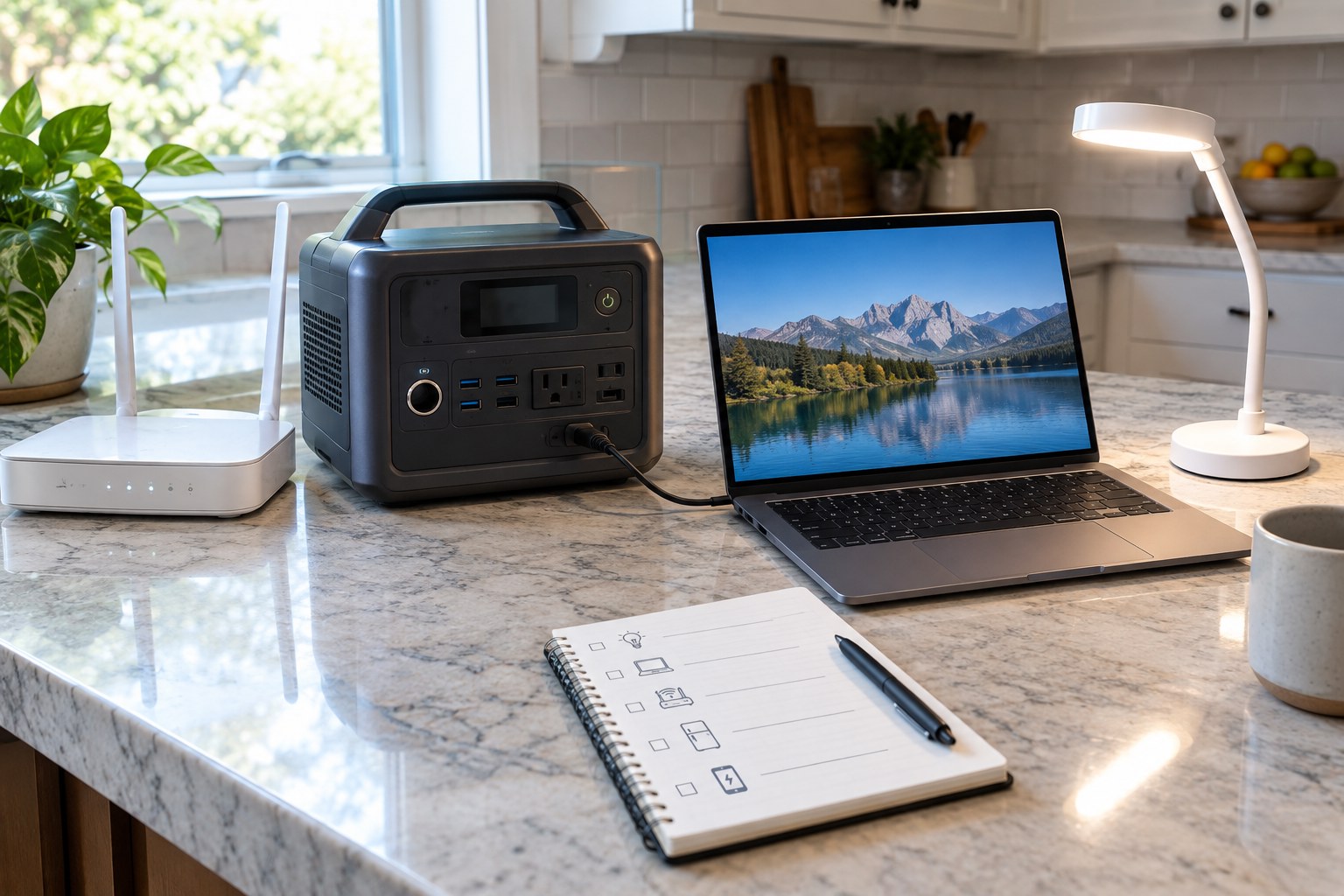
List what must run during an outage: phone charging, Wi-Fi, lights, medical equipment, refrigerator, fan or a small appliance. Check the nameplate or reliable measured wattage for each item, and estimate how many hours you need it. Separate essential loads from nice-to-have loads. A power station suitable for a router and laptop may be inadequate for a space heater or large appliance. Never assume a device is appropriate for medical life-support equipment without a manufacturer-approved backup plan.
Buying check: Write a list of devices, running watts, startup surge where relevant, and desired runtime before comparing any sale listings.
2. Compare watt-hours, not just watts
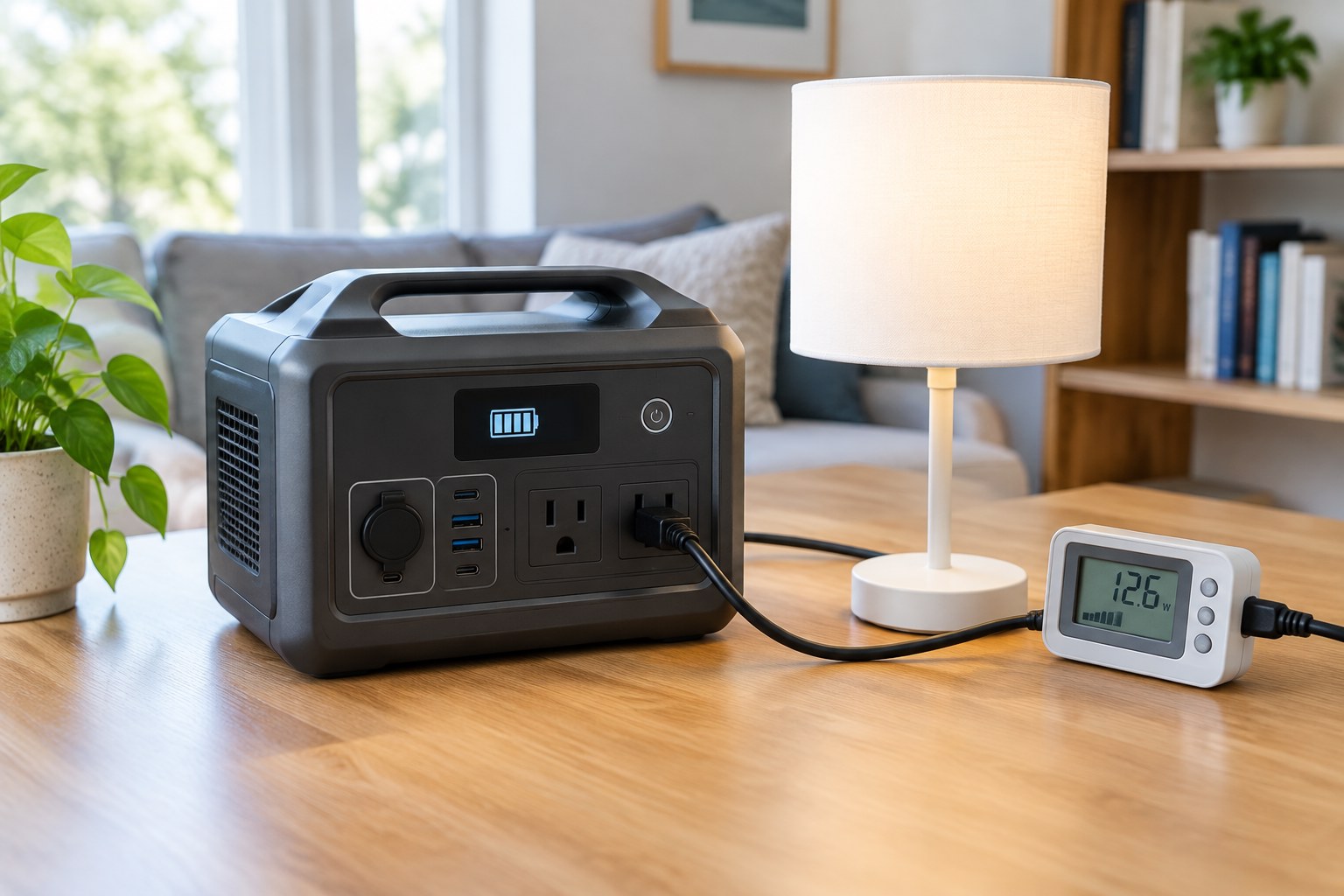
Battery capacity is normally expressed in watt-hours (Wh), while inverter output is expressed in watts (W). A 1,000Wh battery is a measure of stored energy, not a promise that it can continuously deliver 1,000W or power an appliance for precisely one hour. Real AC runtime is lower because of inverter losses, conversion overhead, temperature, battery reserve and changing loads. For a rough planning example, a 60W load for 8 hours needs 480Wh before accounting for losses.
Buying check: Compare rated Wh, usable capacity guidance, and continuous AC output as separate specifications.
3. Check continuous output and startup surge
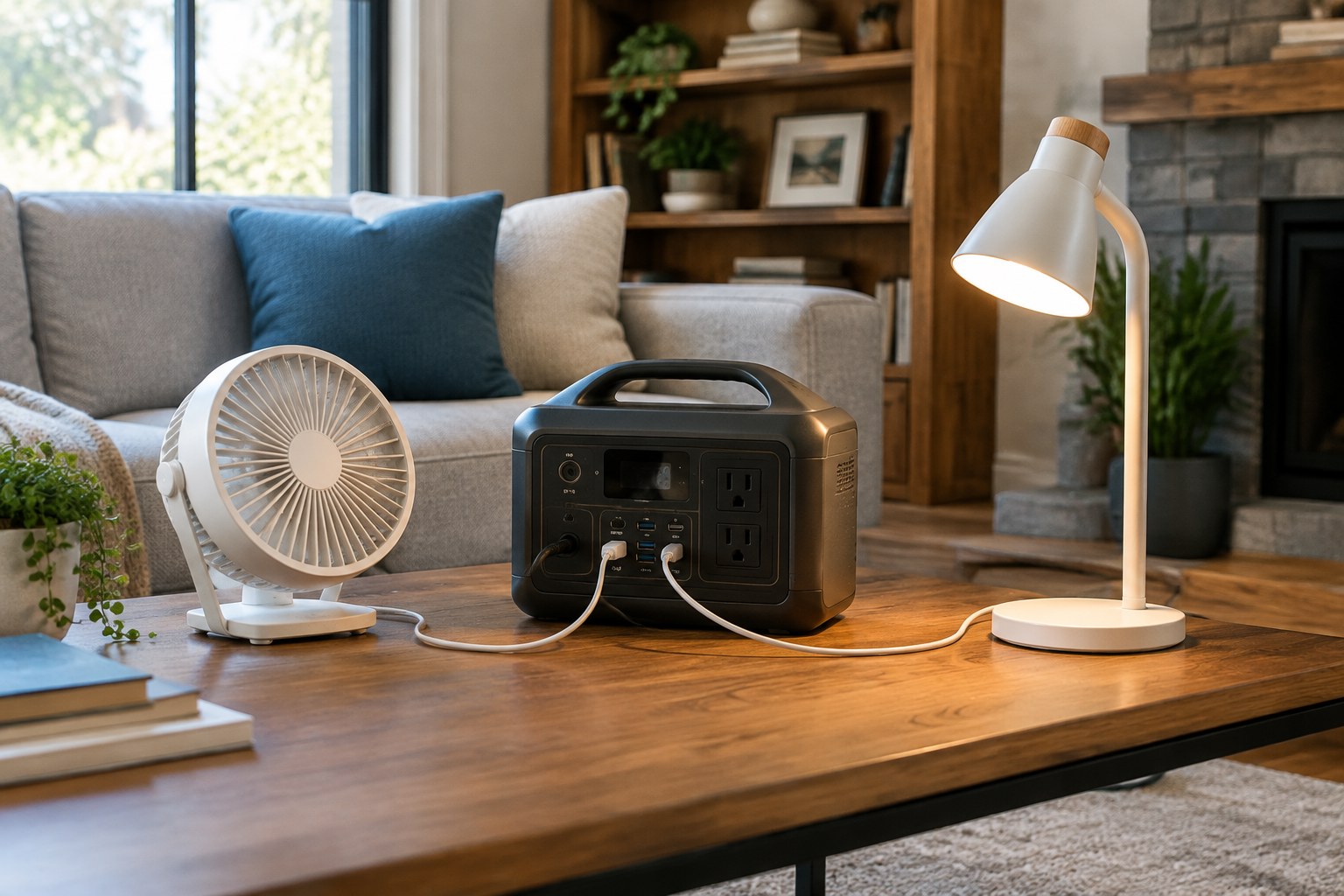
A generator’s AC inverter must handle the combined running power of devices used at the same time. Refrigerators, pumps and other motor loads may briefly draw more at startup than their steady running wattage. Some products advertise boost modes that reduce voltage or limit supported loads; these are not the same as full rated continuous power. Also check outlet count, outlet types, grounding guidance and whether a device’s waveform is suitable for your equipment.
Buying check: Match simultaneous running watts and startup surge to the manufacturer’s published ratings, leaving a sensible margin.
4. Understand solar input and panel compatibility
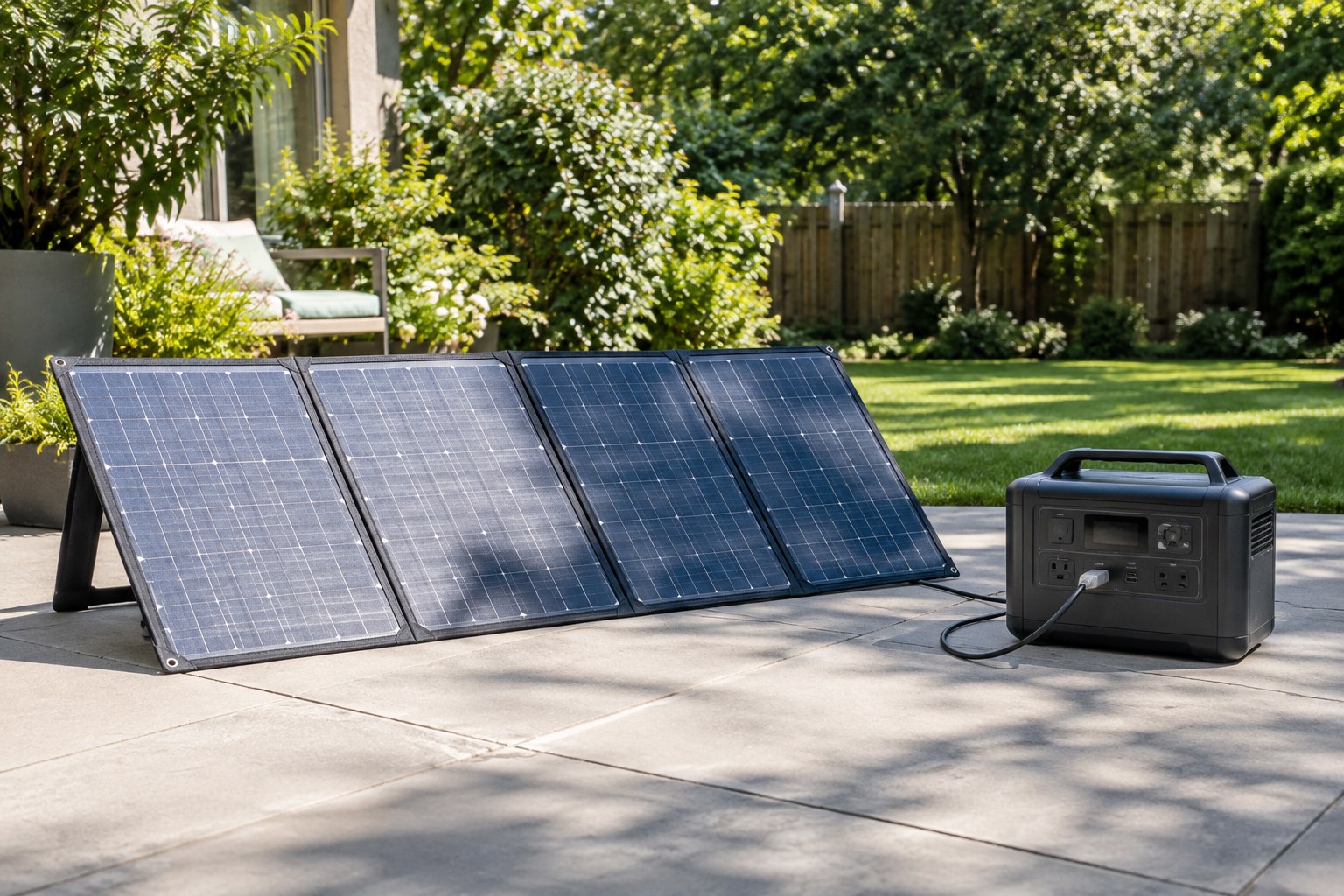
The phrase solar generator often describes a portable power station sold with, or capable of accepting, solar panels. Solar recharging depends on sunlight, orientation, shading, panel temperature and charging limits. Check the power station’s supported solar voltage range, current limit, maximum input watts and connector requirements. Do not assume any panel or series arrangement is compatible simply because the wattage looks similar.
Buying check: Confirm the exact station and panel model combination in manufacturer documentation; avoid unsupported adapters or unsafe wiring.
5. Compare battery chemistry, cycle ratings and warranty
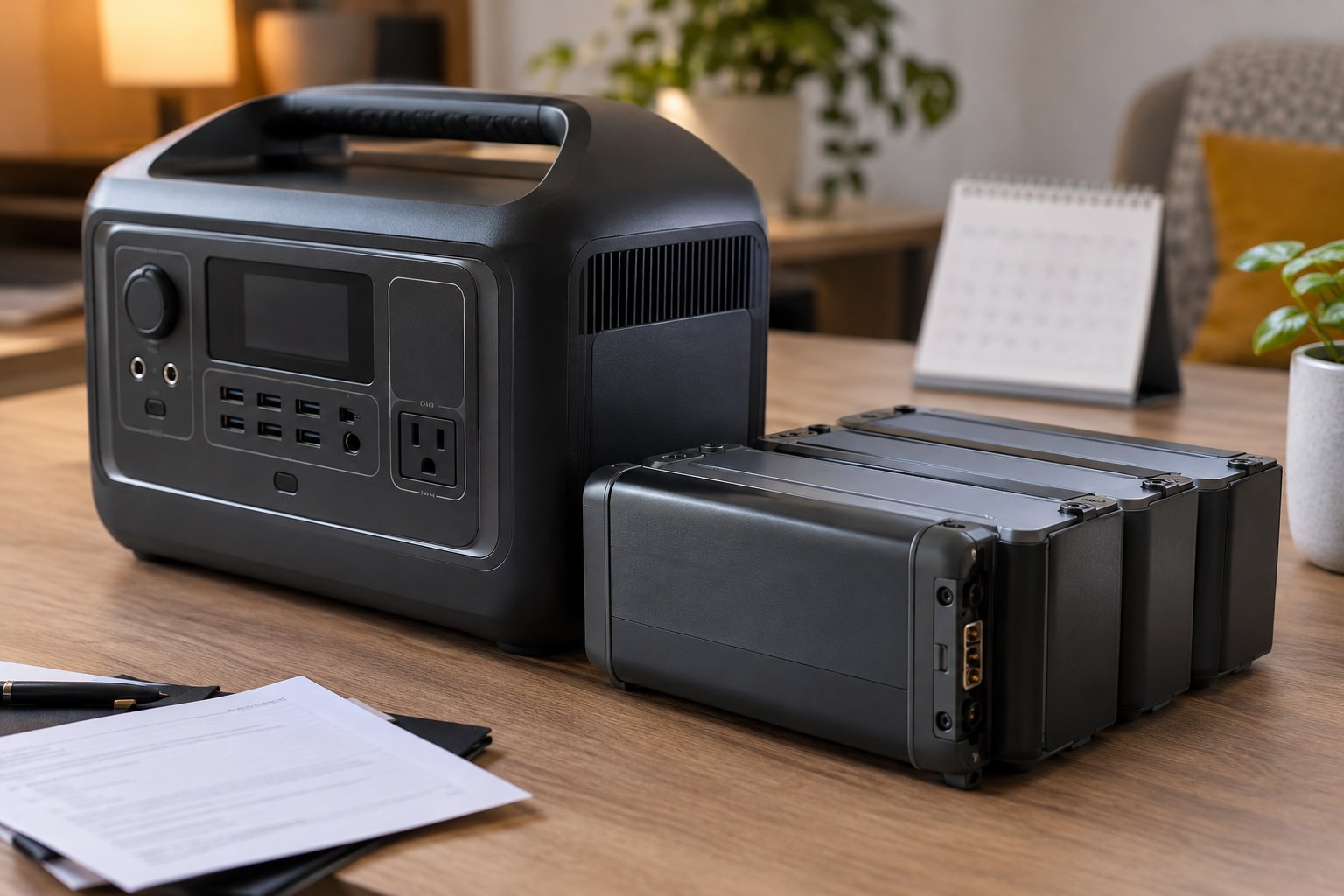
Lithium iron phosphate (LFP or LiFePO4) and other lithium-ion chemistries differ in weight, cycle-life claims, operating limits and price. Published cycle counts often refer to capacity remaining after specified test conditions, not a guarantee of identical real-world lifespan. Read the warranty’s term, exclusions, claim process and whether the seller is authorized. Consider storage temperature, recharge interval and replacement support.
Buying check: Compare chemistry, stated capacity-retention cycle test, warranty and weight—not one headline number alone.
6. Calculate total cost and real value
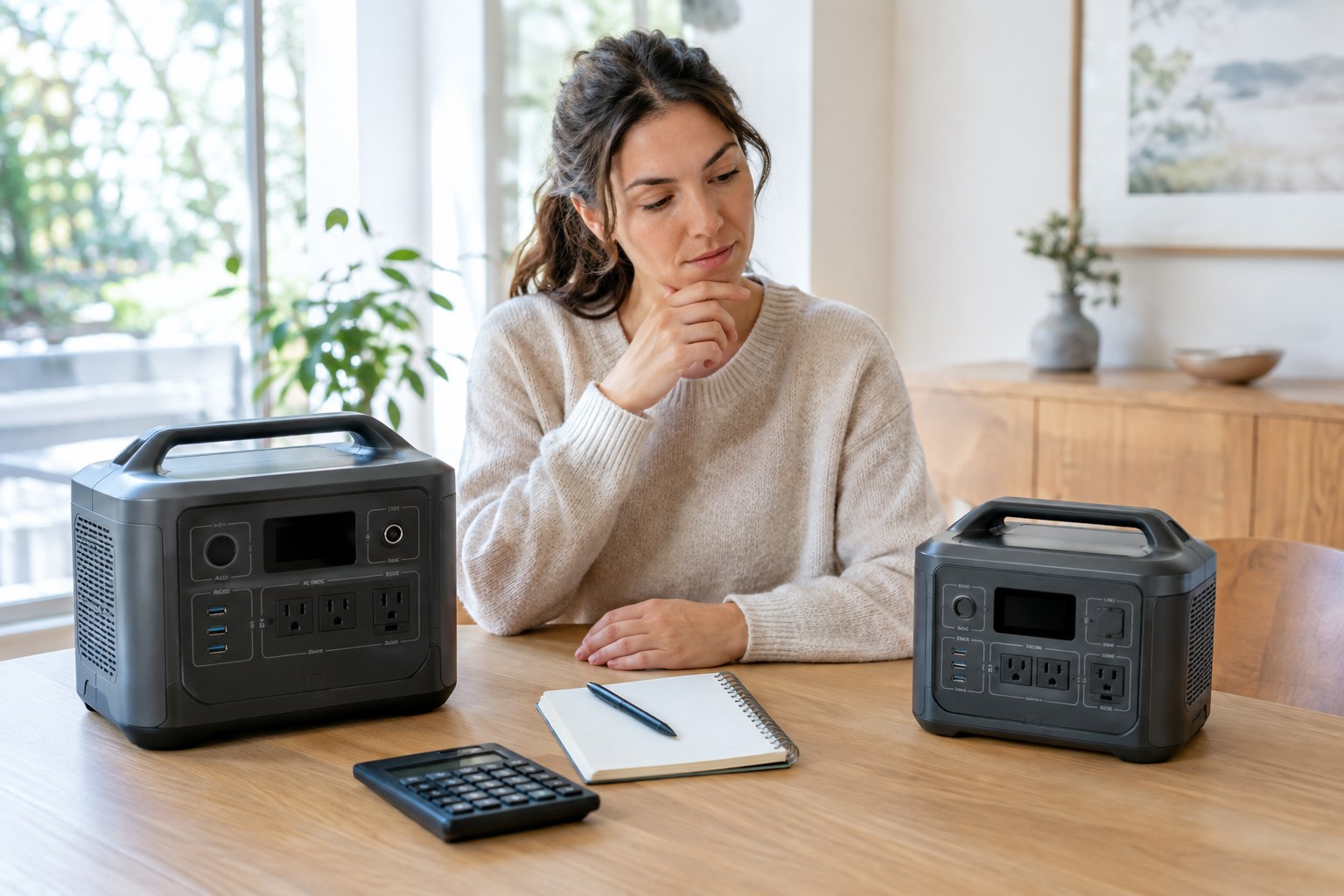
A low advertised price can hide missing solar panels, expensive proprietary cables, optional expansion batteries or limited warranty support. Compare the exact bundle contents and total delivered price. A useful normalization is price per rated Wh, but it cannot measure inverter quality, durability, solar charging performance or service. For example, $700 divided by 1,000Wh is $0.70 per rated Wh; this is arithmetic, not a verified market price or deal. Also account for tax, shipping and any return fees.
Buying check: Record exact model, battery Wh, inverter W, solar-input limit, included accessories, warranty and checkout total on the same worksheet.
7. Check recharge time, portability and noise
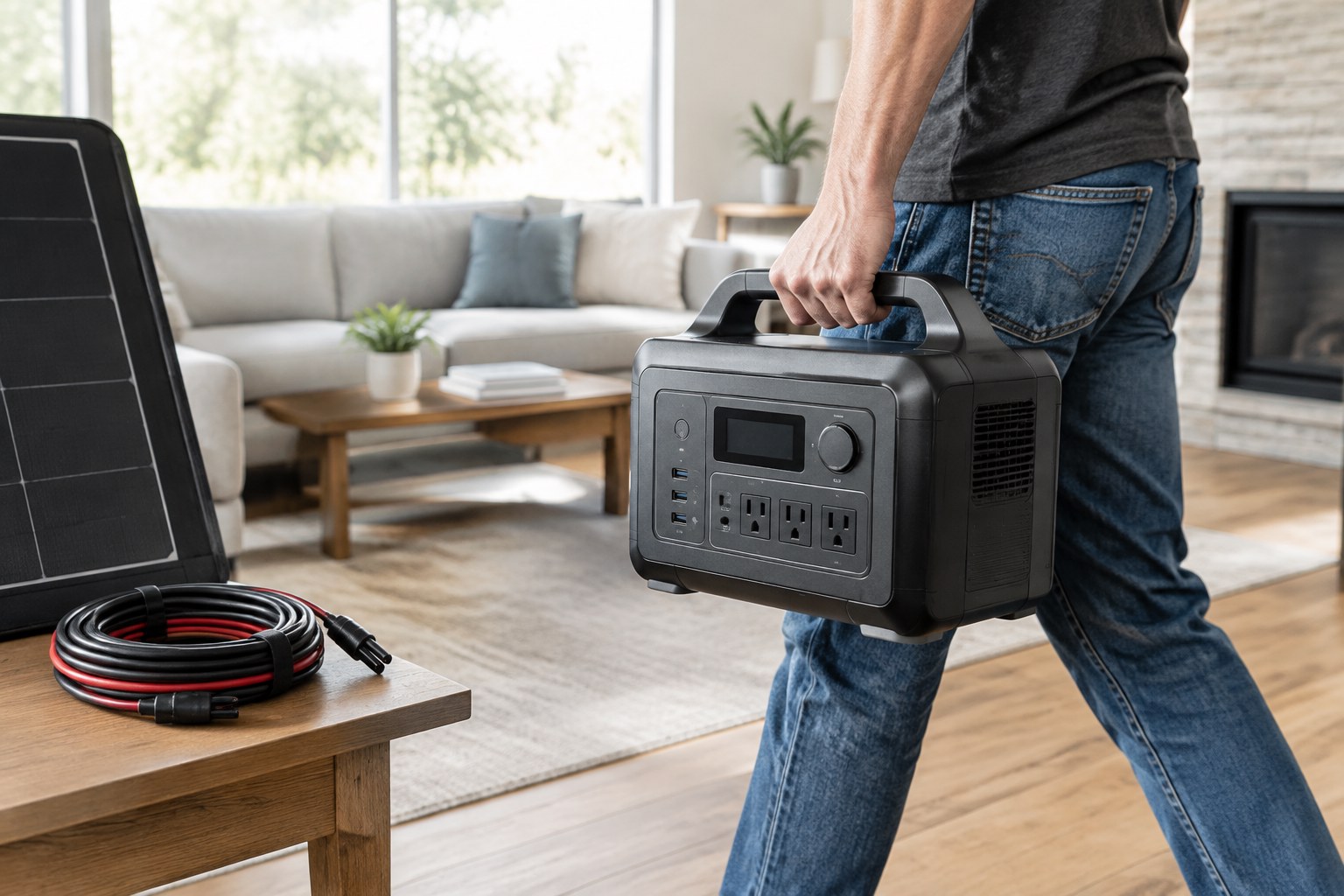
Recharge claims may depend on ideal wall power, high-input settings, optional chargers or solar conditions. Review whether fast charging creates fan noise or extra heat. Check weight, handles, wheel options, dimensions and how you will transport the unit during an outage. A high-capacity station that cannot be moved safely may be a poor fit for a small apartment or camping trip.
Buying check: Compare recharge assumptions and physical dimensions alongside battery capacity.
8. Review safety and home-backup installation
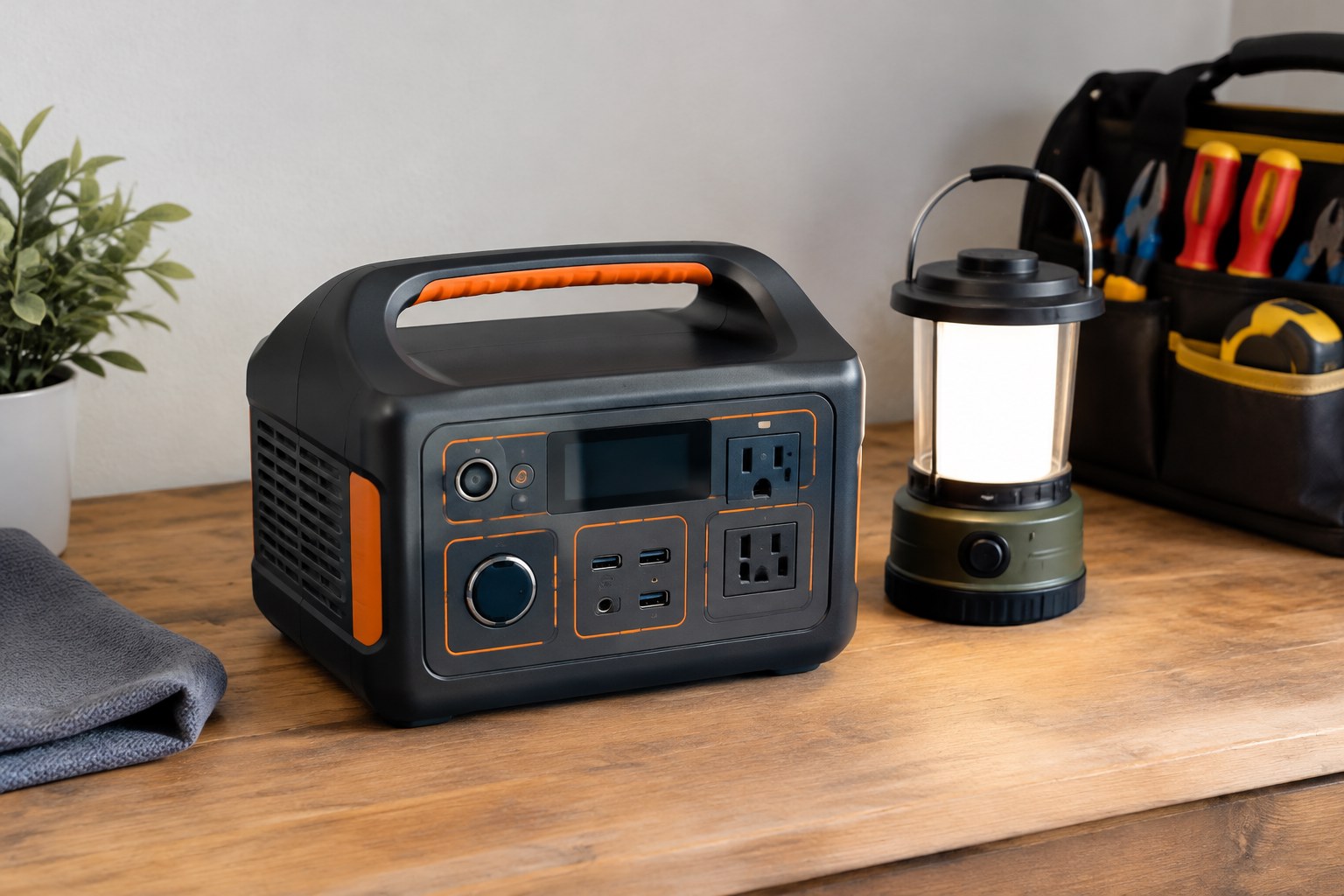
Portable power stations should be operated and stored according to the manufacturer’s ventilation, moisture and temperature guidance. Never connect a power station to a home receptacle to backfeed house wiring. A transfer switch or other approved home integration must be correctly specified and installed by a qualified electrician. Do not run fuel-powered generators indoors or near openings; a battery station is different from a combustion generator. For medical or critical devices, use an appropriate professionally planned backup system.
Buying check: Check certifications, manufacturer instructions, permitted charging locations and whether professional installation is required.
9. Verify the Black Friday offer and return policy
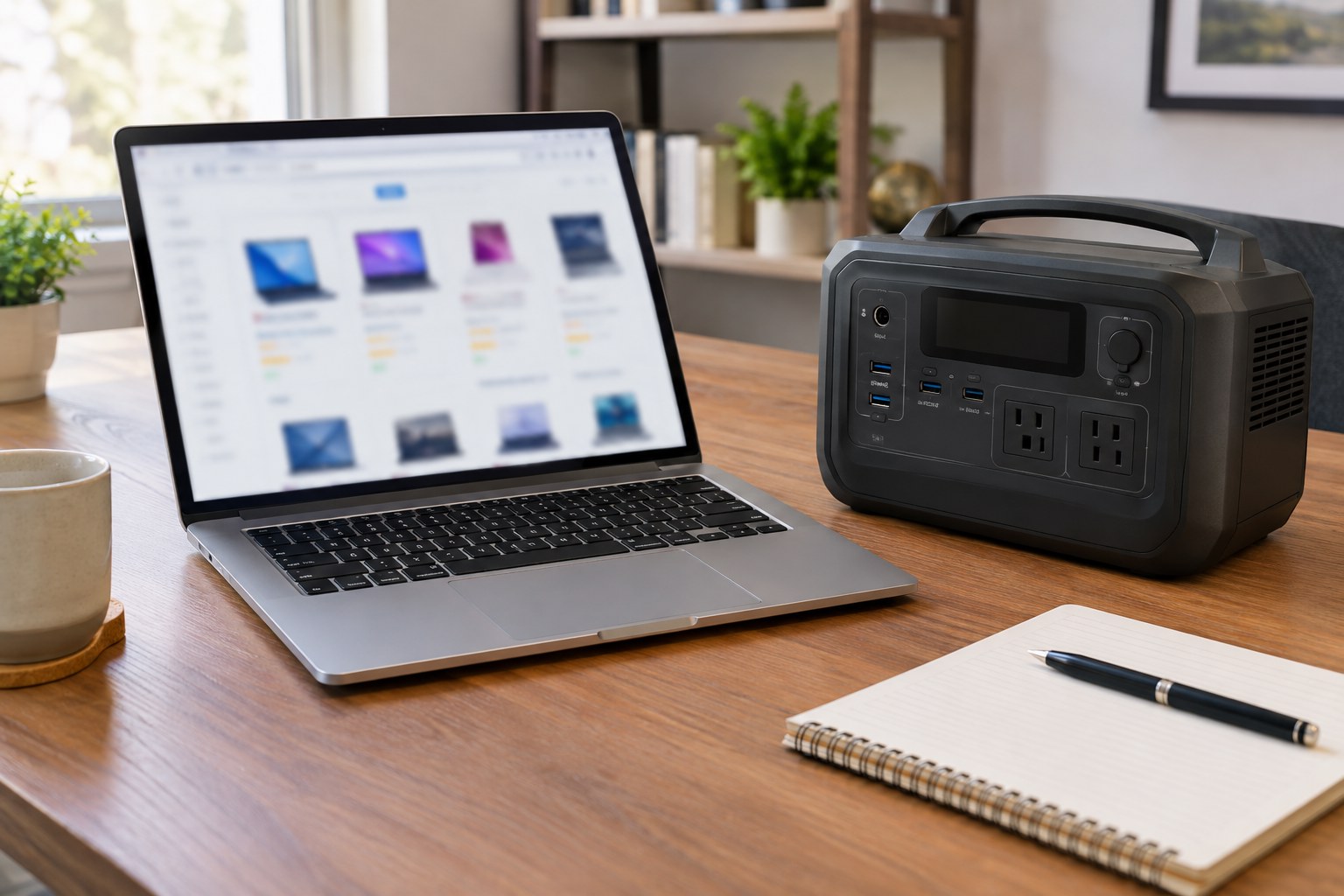
Compare the exact model number, not a similarly named older version. Review recent price history when available, seller identity, authorized-dealer status, return window, restocking fees, warranty registration and what is actually included. Watch for inflated list prices, unclear refurbished status and misleading solar-panel bundle photos. Do not treat an affiliate listing or a countdown timer as evidence of a genuine discount.
Buying check: Save screenshots or records of the final price, model number, included accessories and return terms before checkout.
Solar generator comparison worksheet
Use the same checklist for every model you shortlist. A product that fails an essential safety or compatibility requirement should not win simply because its cost per watt-hour is lower.
| Specification | What to compare |
|---|---|
| Battery capacity | Rated Wh; any usable-capacity details |
| Inverter output | Continuous AC watts, surge rating and outlet configuration |
| Solar charging | Allowed voltage/current, max input and panel compatibility |
| Battery life | Chemistry, cycle-rating test conditions and warranty |
| Practicality | Weight, size, recharge times, fan noise and safety guidance |
| Total value | Exact bundle, checkout total, accessories, return policy and support |
Simple runtime calculation example
Suppose a router uses 12W, two LED lamps use 9W each, and a laptop averages 45W while charging. The combined estimated load is 75W. Eight hours would require roughly 600Wh at the devices (75 × 8), before conversion losses and battery reserve. A 600Wh advertised station therefore should not be assumed sufficient. Measure your own equipment, account for intermittent loads and consult the product’s usable-energy guidance.
Five solar generators to compare before Black Friday
These five models have appeared in earlier AURA buying guides with approved affiliate links. Their inclusion is a starting point for comparison, not a claim that we tested them or confirmed any current sale price.
Frequently asked questions
Can a 1,000Wh solar generator power a refrigerator?
Possibly, but not based on battery capacity alone. Check the refrigerator’s running energy consumption, startup surge and the power station’s continuous and surge output. Real runtime varies by compressor cycling, ambient temperature and inverter losses.
Does a solar generator include solar panels?
Not always. Many listings sell the battery power station alone, while others bundle panels. Read the exact included-items list.
Is a larger battery always better value?
No. Higher capacity adds weight and cost. A smaller, adequately rated unit may be better for a defined set of essential loads, while whole-home backup usually requires a different level of planning.
Can I connect a portable power station to my house wiring?
Do not backfeed through a household outlet. Home integration requires an appropriate approved transfer arrangement and qualified installation according to local electrical rules and manufacturer guidance.
Conclusion
Compare usable energy, continuous output, solar compatibility, safety, warranty and total delivered cost before deciding whether a Black Friday solar generator offer is worthwhile. The strongest deal is a system that fits your specific backup plan and can be operated safely—not a speculative discount percentage.


