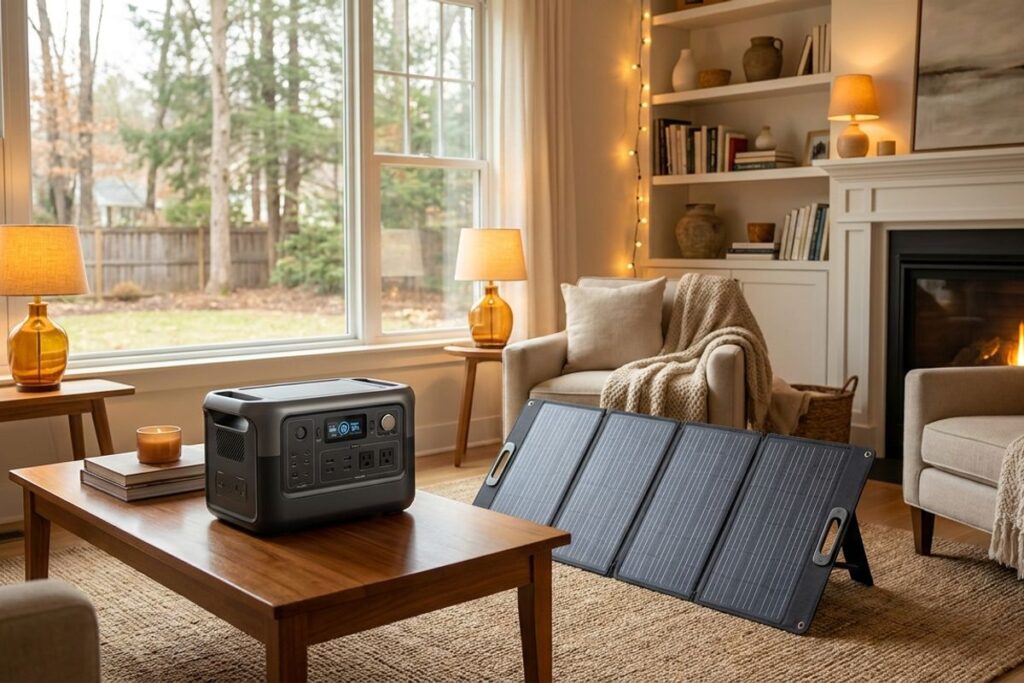
If you have been shopping for backup power, you have probably noticed something confusing: some products are called solar generators, while others are called portable power stations. Then you look at the pictures and realize they can appear almost identical.
So, what is the difference between a solar generator and a portable power station? The answer depends partly on how manufacturers use the terms. In today’s market, the two labels often describe the same core battery-and-inverter technology, while “solar generator” usually emphasizes solar charging or a package that includes solar panels.
That distinction matters when you are comparing prices, planning for a power outage, preparing an RV or camping setup, or deciding whether you need solar panels at all. This guide breaks it down without the technical jargon.
The Short Answer
A portable power station is a rechargeable battery system with an inverter, AC outlets, USB ports and other charging ports. It can usually be recharged from a wall outlet, vehicle or compatible solar panels.
A solar generator is generally a portable power station that is marketed around solar charging, and it may be sold with compatible solar panels as part of a package. In everyday shopping language, the terms are frequently used interchangeably.
So, instead of focusing only on the label, compare the specifications that actually determine what the unit can do: battery capacity, continuous output, surge output, charging options, solar input and portability.
What Is a Portable Power Station?

A portable power station is essentially a large rechargeable battery system designed to provide electricity away from a traditional wall outlet or during a temporary outage.
Most modern units combine several components in one enclosure:
- Rechargeable battery: Stores electrical energy for later use. Newer models commonly use lithium-based battery chemistry, including LiFePO4.
- Inverter: Converts the battery’s stored DC electricity into AC electricity for compatible household devices.
- AC outlets: Allow you to plug in devices such as lamps, chargers and selected small appliances.
- USB and DC ports: Useful for phones, tablets, laptops, cameras, lights and other electronics.
- Charging system: Allows the battery to be replenished from sources such as a household outlet, vehicle or compatible solar panels.
Think of it as a much larger, more capable version of a phone power bank. Instead of only charging a smartphone, a properly sized portable power station can provide power for several devices at once.
Shop This Example
BLUETTI AC200PL Portable Power Station — 2304Wh / 2400W
A useful example of the power-station-only side of this comparison: a 2304Wh LiFePO4 battery system with 2400W output, sold here without a bundled solar panel. Always compare your appliance loads and charging requirements with the unit’s specifications before buying.
View on Amazon → (paid link)
When Does a Portable Power Station Make Sense?
A standalone portable power station can be especially useful for short power outages, road trips, camping, tailgating, backyard activities and temporary workspaces. If your main goal is to keep phones charged, maintain internet access, run a few lights or power small electronics, you may not need a solar-panel package from day one.
The main limitation is simple: the battery eventually runs out. Once the stored energy is depleted, you need a suitable way to recharge it.
Solar Generator vs Portable Power Station: What Is a Solar Generator?
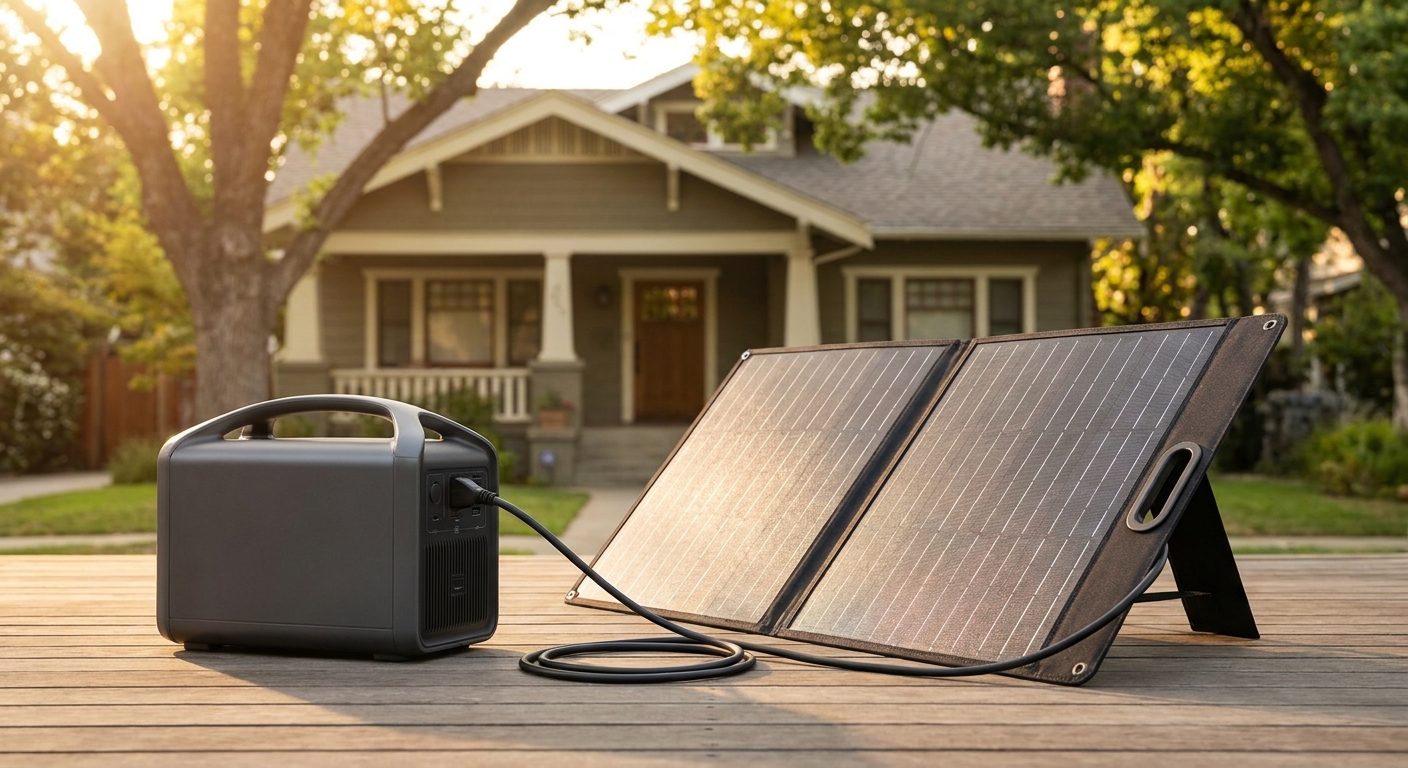
The phrase solar generator can sound as though the box itself creates electricity. Usually, that is not what is happening.
A solar generator setup uses solar panels to capture sunlight and send that energy to the battery system. The stored electricity can then be used later through the unit’s AC, USB or DC outputs.
Depending on the manufacturer, a “solar generator” may mean:
- A portable power station bundled with one or more solar panels.
- A portable power station specifically designed and marketed for solar charging.
- A complete package containing the battery unit, solar charging hardware and compatible panels.
This is why two listings can look almost identical even though one is called a solar generator and the other a portable power station. The difference may be the included accessories and marketing rather than a completely different type of battery technology.
Shop This Example
BLUETTI AC200PL Solar Generator Bundle + 350W Solar Panel
This bundle illustrates the solar-generator side of the comparison: the AC200PL battery power station paired with a 350W solar panel for an additional off-grid charging option. Check solar-input limits, connector compatibility and expected charging conditions before choosing a solar setup.
View on Amazon → (paid link)
Solar Generator vs Portable Power Station: Side-by-Side
| Feature | Portable Power Station | Solar Generator |
|---|---|---|
| Core equipment | Battery, inverter and charging system | Usually the same battery-based system, often paired or marketed with solar panels |
| Wall charging | Common | Common |
| Vehicle charging | Often supported | Often supported |
| Solar charging | Often supported on compatible models | Usually a central selling point |
| Solar panels included? | Usually sold separately | May be included, depending on the package |
| Noise while running | Typically very quiet | Typically very quiet |
| Emissions while operating | No fuel combustion | No fuel combustion |
| What to compare | Capacity, output, ports and charging | Capacity, output, ports, charging and solar input |
The important point is that the label alone does not tell you how capable the unit is. A product called a solar generator can have a smaller battery than a product marketed as a portable power station, and the reverse can also be true.
The Comparison That Actually Matters: Battery vs Fuel Generator
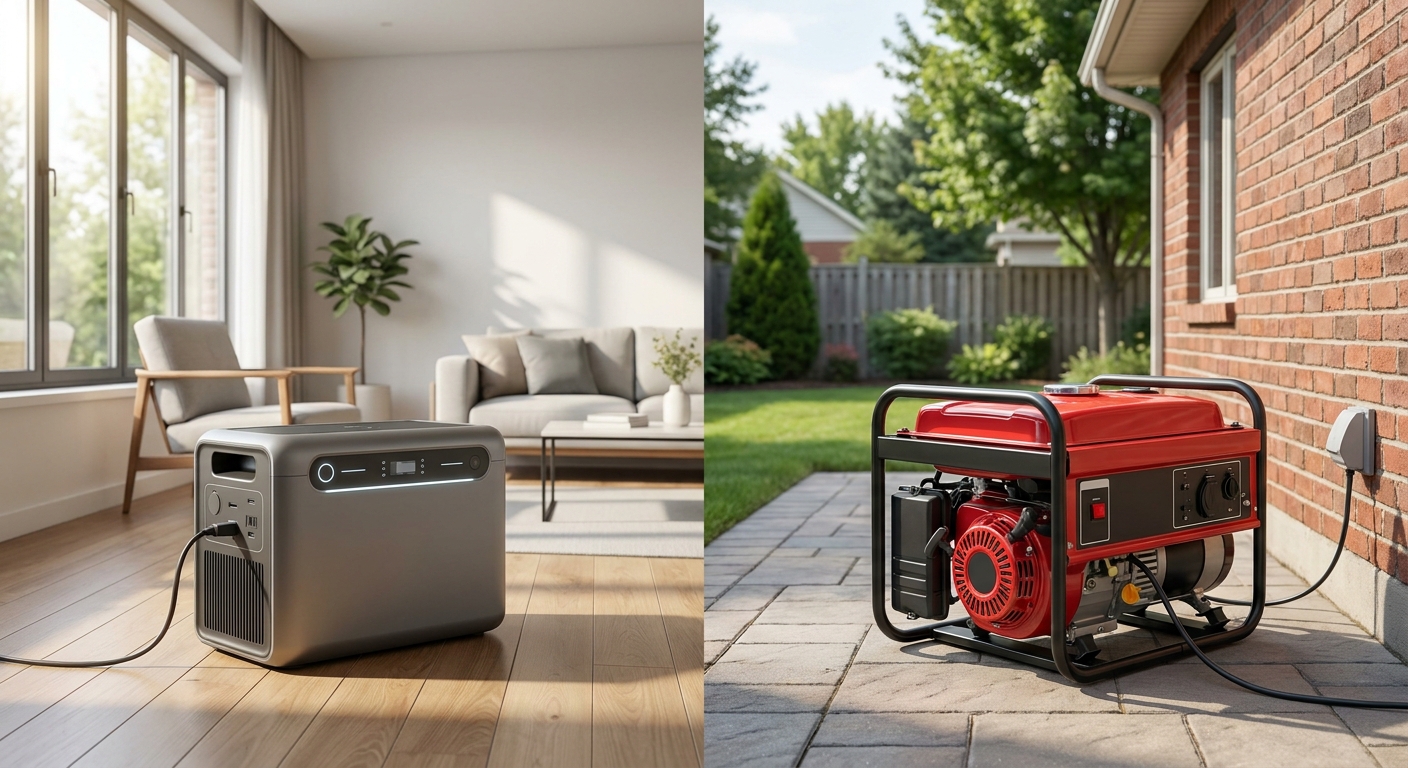
If you are trying to decide what kind of backup power is right for your home, the more useful comparison is often battery-based backup versus a traditional fuel generator.
Noise and Exhaust
Battery power stations do not burn gasoline or propane while they are supplying electricity, so they do not produce engine exhaust. That makes them attractive for indoor emergency use when the manufacturer’s instructions permit indoor operation.
Traditional portable fuel generators are different. They produce engine exhaust and carbon monoxide, so they must be operated outdoors and away from doors, windows and vents. The U.S. Consumer Product Safety Commission warns that portable generators can pose serious risks including carbon monoxide poisoning, electric shock and fire.
See portable generator safety information from the U.S. Consumer Product Safety Commission (CPSC).
Runtime
Fuel generators can continue producing electricity as long as they have an appropriate fuel supply and are operated according to the manufacturer’s instructions. Battery power stations have a finite stored capacity. When the battery is depleted, you need to recharge it.
Solar charging can extend the usefulness of a battery system, but the available sunlight, panel capacity, weather and the unit’s solar-input limits all affect how quickly it can recharge.
Maintenance
Fuel generators have engines and therefore require more conventional mechanical maintenance. Depending on the model, that can include oil changes, fuel management, spark-plug checks and periodic test runs.
Battery power stations are simpler to maintain. You generally need to keep the battery charged, store the unit according to the manufacturer’s recommendations and periodically check that the equipment and cables are in good condition.
Portability
Both types can be portable, but battery units are often easier to use in places where noise, fumes and fuel handling are undesirable. Weight still varies considerably, so check the product’s actual weight and carrying design before buying.
Which One Should You Buy?
Once you stop worrying about the names, the buying decision becomes much easier. Start with how you expect to use the power, rather than whether a product description says “solar generator.” If you are also comparing backup equipment for lower household energy use, see our guides to 25 Simple Ways to Reduce Energy Use at Home and 20 Home Energy-Saving Upgrades.
Choose a Portable Power Station If:
- You mainly need backup power for a few hours or a short outage.
- You want a quiet way to charge phones, laptops, lights and networking equipment.
- You plan to use the unit for camping, road trips, tailgating or occasional outdoor projects.
- You want to keep the initial purchase cost lower and add solar panels later.
- You live somewhere without a convenient outdoor area for setting up solar panels.
Choose a Solar-Powered Setup If:
- You want the ability to recharge away from the electrical grid.
- You spend extended periods camping, RVing or traveling off-grid.
- You want an additional recharge option during a prolonged outage.
- You have a suitable sunny location where portable panels can be positioned safely.
- You are building a broader emergency-preparedness setup around renewable charging.
In many cases, you do not have to make this an either-or decision. A portable power station that supports compatible solar input can be purchased first and paired with solar panels later.
What Specifications Should You Compare?
Use this quick buying checklist before choosing between a solar generator and portable power station:
- List your essential loads: write down the devices and appliances you expect to use during an outage.
- Add their wattages: check both running watts and startup or surge requirements.
- Estimate runtime: decide how many hours you want essential devices to operate before recharging.
- Check solar compatibility: match the panel voltage, current and maximum solar-input wattage to the power station.
- Leave a margin: avoid sizing a unit right at its maximum output if your loads may vary.
When shopping, ignore the marketing label for a moment and compare the numbers.
1. Battery Capacity in Watt-Hours (Wh)
Watt-hours tell you how much energy the battery can store. A larger Wh rating generally means more stored energy, although actual runtime depends on the device you are powering and system losses.
2. Continuous Output in Watts (W)
This tells you how much power the inverter can continuously supply. If an appliance needs more power than the unit can provide, the power station may shut down or fail to operate that appliance.
3. Surge Output
Some appliances need a short burst of extra power when their motors start. Refrigerators, pumps and other motor-driven equipment can have higher startup requirements, so check both continuous and surge ratings before assuming a unit can run a particular appliance.
4. Solar Input
If solar charging matters to you, check the maximum solar-input wattage and the supported voltage range. A large solar panel array does not automatically mean faster charging if the power station cannot accept the additional input.
5. Battery Chemistry
Battery chemistry affects characteristics such as cycle life, weight and operating behavior. LiFePO4 batteries are common in newer portable power products, but the specific specifications and manufacturer’s warranty matter more than the label alone.
Common Misconceptions

“A Solar Generator Only Works When the Sun Is Out.”
Not necessarily. Many solar-capable battery systems can also charge from a wall outlet or compatible vehicle source. Solar is an additional charging method, not necessarily the only one.
“A Portable Power Station Cannot Run Large Appliances.”
That depends on the model and the appliance. Some larger power stations can supply substantial loads, while smaller units are designed mainly for electronics and light-duty appliances. Always compare the appliance’s running and startup requirements with the power station’s specifications.
“Solar Generator and Portable Power Station Are Completely Different Technologies.”
In everyday retail use, that is usually too simplistic. The terminology varies between manufacturers. Many solar generators are portable power stations configured, packaged or marketed around solar charging. What you actually receive depends on the product bundle and specifications.
Frequently Asked Questions
Is a solar generator the same as a portable power station?
Often, yes in practical terms. A solar generator usually refers to a battery-based portable power station that is designed, marketed or bundled for solar charging. The exact meaning can vary by manufacturer.
Can a portable power station be charged with solar panels?
Many models can, provided the solar panels and electrical characteristics are compatible with the unit’s solar-input specifications. Check the manufacturer’s limits before connecting panels.
Can you use a solar generator indoors?
Battery-based power stations do not produce combustion exhaust, but you should always follow the manufacturer’s instructions for indoor use, charging and ventilation requirements.
Which is better for a power outage: a solar generator or portable power station?
For short outages, either can work well if its capacity and output match your needs. If you want the ability to recharge without grid power, choose a model that supports suitable solar charging and pair it with compatible panels.
Can a solar generator replace a whole-home generator?
Not automatically. Whole-home loads such as central HVAC, electric water heaters and other high-demand equipment can require far more continuous and startup power than many portable battery systems provide. Compare your actual loads with the equipment ratings before buying.
Final Thoughts
The phrase solar generator vs portable power station makes the two products sound more different than they often are.
In today’s market, both terms can refer to rechargeable battery systems that provide AC and DC power without running a fuel-burning engine. “Solar generator” generally puts more emphasis on solar charging or a package that includes solar panels, while “portable power station” is the broader term for the battery-and-inverter unit itself.
That means the smartest way to shop is not to choose based on the name. Look at Wh capacity, continuous watts, surge watts, battery chemistry, solar-input limits, charging options, weight and the devices you actually need to power.
If you are already considering a solar generator for home backup, our related guide can help you compare specific options:
5 Best Solar Powered Generators for Home Backup Power (2026 Review)
Once you know your expected loads and how long you need backup power, the choice becomes much less about marketing terminology and much more about finding the right capacity, output and charging setup for your home or outdoor lifestyle.
Helpful Safety Resource
For information about the hazards associated with portable fuel generators, including carbon monoxide poisoning, electric shock and fire, consult the U.S. Consumer Product Safety Commission.


Pingback: 20 Easy Sustainable Living Ideas for Your Home
Pingback: Solar Powered Generators for Home Backup Power: 5 Best
Pingback: How Big of a Solar Generator Do You Need for Your Home?