
Choosing the right solar generator for your home can feel confusing. If you are comparing generator types first, see our guide to solar generators vs. portable power stations. A unit that is too small may shut down when you need it most, while an oversized system can cost more than necessary and still leave you with the wrong kind of backup power.
For most U.S. households, the best approach is not to ask, “How big is a solar generator?” but rather, “Which essential appliances do I want to run, for how long, and during what kind of outage?” This guide walks you through the numbers in plain English so you can size a home solar generator with confidence.

What Size Solar Generator for Home Use Do You Need?
There is no single solar generator size that works for every home. Your ideal capacity depends on your essential loads, starting power requirements, desired runtime, and whether you plan to recharge from solar panels during an extended outage.
As a practical starting point, many homeowners can think in three broad ranges:
- 1,000–2,000Wh: Best for basic emergency essentials such as phones, Wi-Fi, lights, laptops, a CPAP machine, or a small refrigerator for limited periods.
Shop This Capacity Range
EF ECOFLOW DELTA 3 Classic + 2×100W Solar Panels
A 1,024Wh LiFePO₄ solar-generator bundle with 1,800W AC output and two 100W solar panels. It is a practical example of the roughly 1,000Wh class for essential-load backup such as refrigeration, communications, lighting and electronics, subject to each appliance’s actual power and startup requirements.
View on Amazon → (paid link)
- 2,000–4,000Wh: A strong middle ground for keeping a refrigerator, communications, lighting, electronics, and selected small appliances running during a typical outage.
Shop This Capacity Range
BLUETTI AC200PL + 350W Solar Panel
With 2,304Wh of LiFePO₄ battery capacity and 2,400W AC output, this solar-generator bundle sits naturally in the 2,000–4,000Wh range discussed here. It includes a 350W solar panel and can be expanded with compatible batteries when longer backup time is needed.
View on Amazon → (paid link)
- 4,000–10,000Wh or more: Better suited to longer outages and heavier loads, especially when you want to support multiple appliances or use a home backup system with higher output.
These ranges are only starting points. A 2,000Wh battery can be more useful than a 5,000Wh unit if the smaller system has enough inverter output and you are disciplined about which appliances you run.
Battery Capacity vs. Power Output: The Two Numbers That Matter
When comparing a solar generator, pay attention to both battery capacity and inverter power. They solve different problems.

Battery capacity is measured in watt-hours
Watt-hours (Wh) tell you how much energy the battery can store. In simple terms, a 2,000Wh battery has roughly twice the stored energy of a 1,000Wh battery, although real-world usable energy is lower because of conversion losses and the system’s operating limits.
Power output is measured in watts
Watts (W) tell you how much power the inverter can deliver at one time. A refrigerator may only use a few hundred watts while running, but its compressor can briefly demand much more when it starts. That starting surge is why a generator can have plenty of battery capacity yet still struggle with an appliance.
Rule of thumb: choose an inverter with enough continuous output for the appliances you may run simultaneously, plus sufficient surge capability for motors and compressors.
How to Calculate Your Home’s Solar Generator Size
The easiest way to size a solar generator is to make a short list of the appliances you actually need during an outage.
- Write down your essential appliances and electronics.
- Find their running wattage from the label, manual, or manufacturer’s specifications.
- Add the running watts for the devices you expect to use at the same time.
- Check whether any device has a higher startup or surge demand.
- Estimate how many hours per day each item will operate.
- Choose battery capacity with some extra margin rather than sizing to the exact minimum.
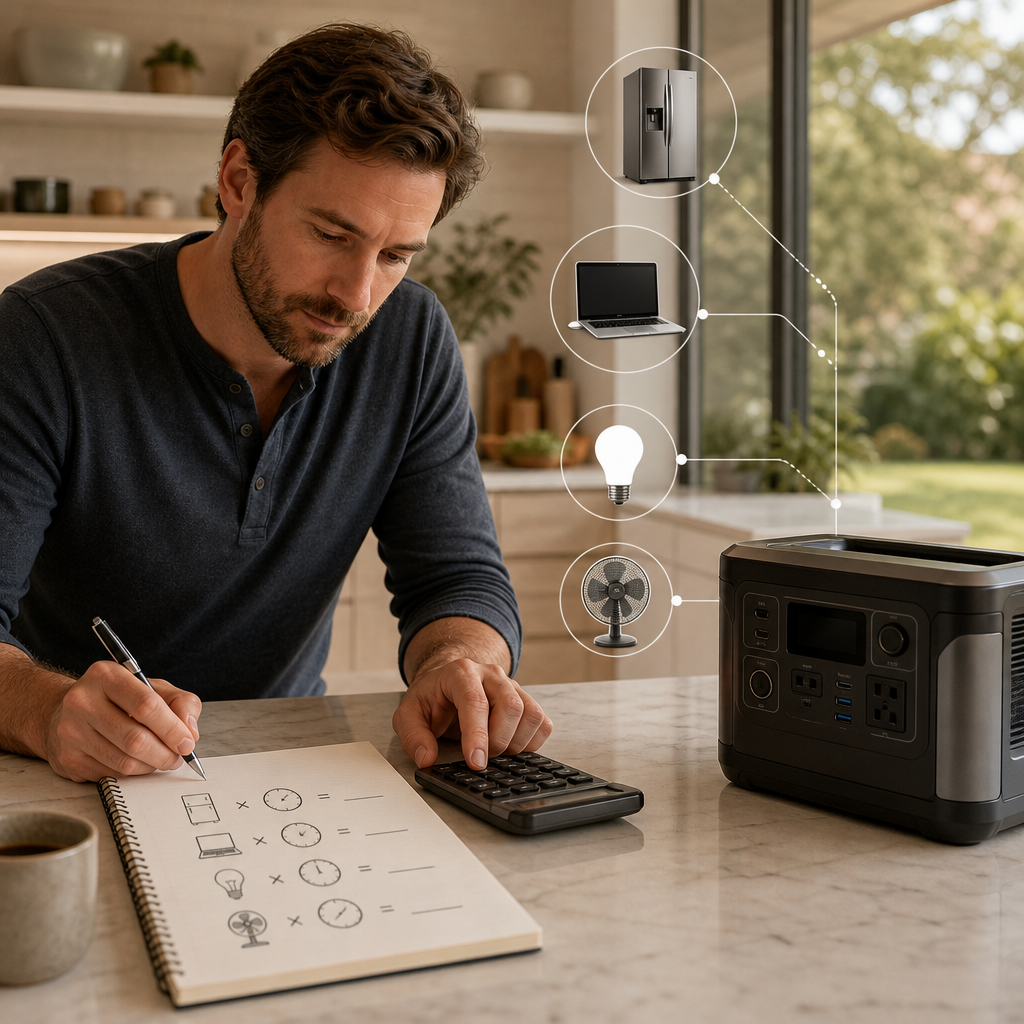
A simple energy calculation
Use this basic formula:
Energy needed (Wh) = appliance watts × hours of use
For example, if a 100W device runs for 6 hours, it needs about 600Wh. If several devices are used, calculate each one and add the results. Because real systems lose some energy through inverter conversion and other electrical processes, it is wise to add a practical buffer instead of buying a battery that exactly matches your calculation.
Example: Sizing a Solar Generator for Essential Home Backup
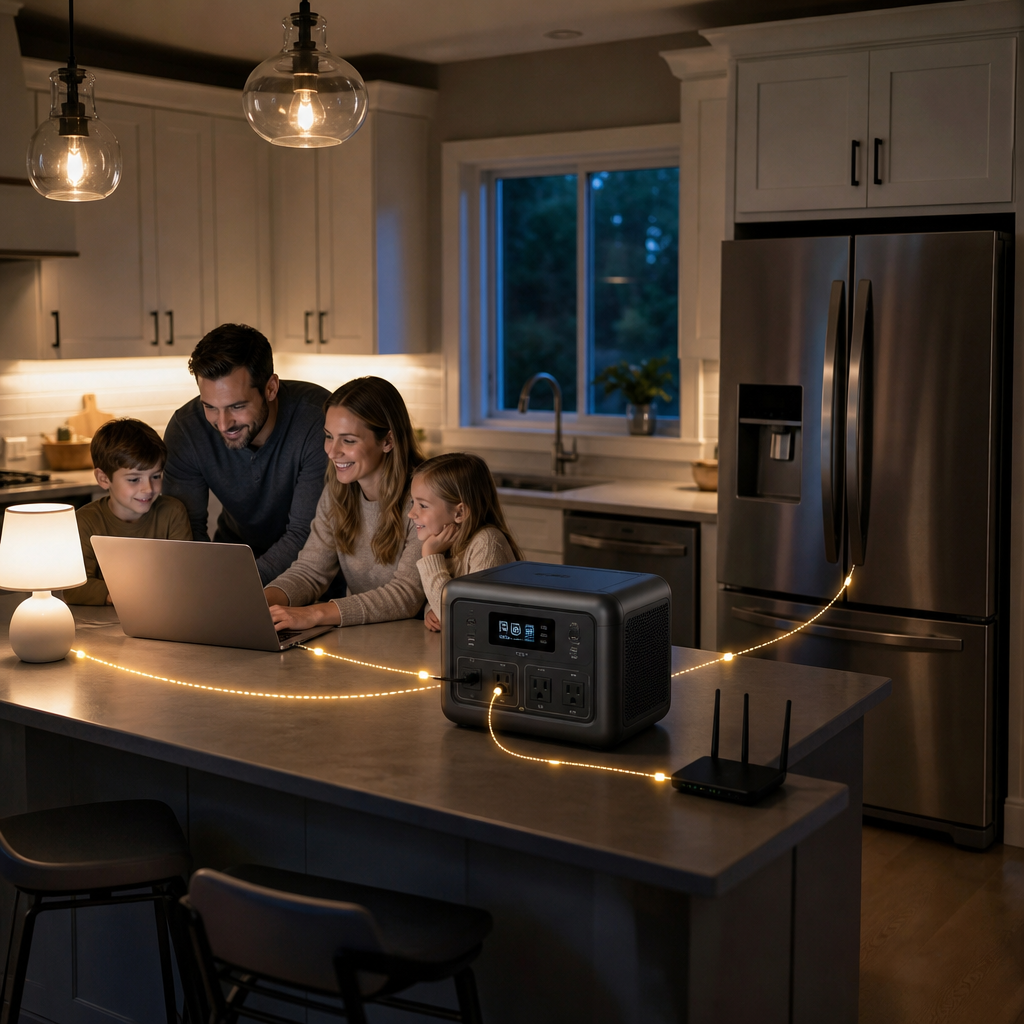
Imagine a U.S. household preparing for a winter storm or summer power outage. Their priority is not to power the entire house. They want refrigeration, internet, lights, phones, a laptop, and a few small appliances.
| Essential load | Example running power | Estimated daily use |
|---|---|---|
| Refrigerator | 150W average while running | About 1,200Wh/day* |
| Wi-Fi router | 15W | 360Wh/day |
| LED lighting | 40W total | 200Wh/day |
| Laptop | 60W | 240Wh/day |
| Phones and small electronics | 30W equivalent | 120Wh/day |
*Actual refrigerator energy use varies substantially with model, room temperature, cycling, and usage.
This example totals roughly 2,120Wh per day before system losses. A homeowner targeting one full day of essential backup would therefore look beyond a nominal 2,000Wh battery and compare usable capacity, inverter performance, and recharge capability. For two days of similar use, a larger battery bank or a reliable solar-recharging plan becomes much more important.
What Can Different Solar Generator Sizes Run?
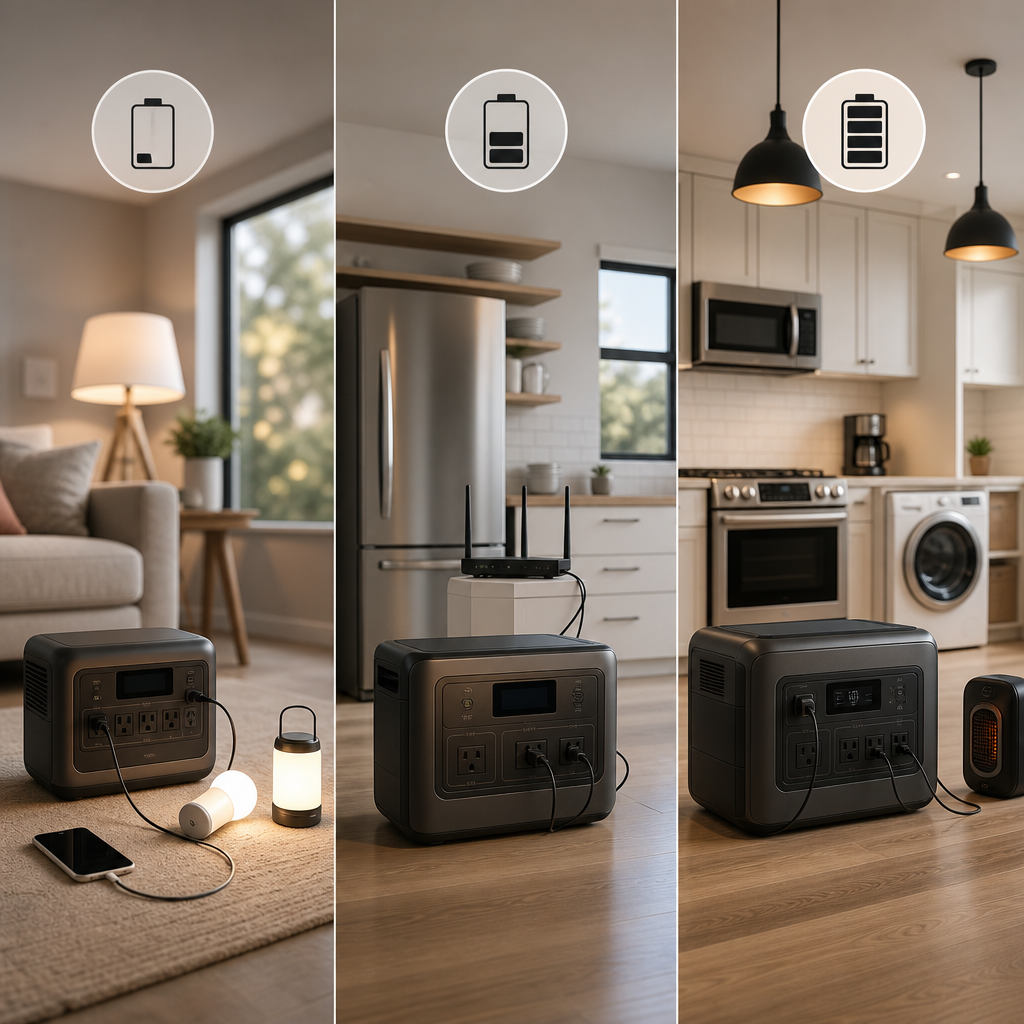
Here is a practical way to think about common capacity classes. Actual runtime depends on the appliance, duty cycle, battery chemistry, inverter efficiency, and environmental conditions.
- Around 1,000Wh: Excellent for communications, lighting, laptops, phones, and short-duration essential loads.
- Around 2,000Wh: More flexible for refrigeration plus electronics and lighting, especially when loads are staggered.
- Around 3,000–5,000Wh: Useful when you want more comfortable runtime or several essential circuits, provided inverter output is also high enough.
- 5,000–10,000Wh+: More appropriate for serious home backup, longer outages, or higher-demand appliances when paired with the right transfer equipment and installation.
Remember that capacity alone does not mean you can run a high-wattage appliance. A large battery with an undersized inverter can still be the wrong choice.
Don’t Forget Startup Power
Some of the most important appliances in a home have motors or compressors. Refrigerators, freezers, sump pumps, furnaces, well pumps, and certain HVAC equipment can draw a brief startup surge above their normal running wattage.
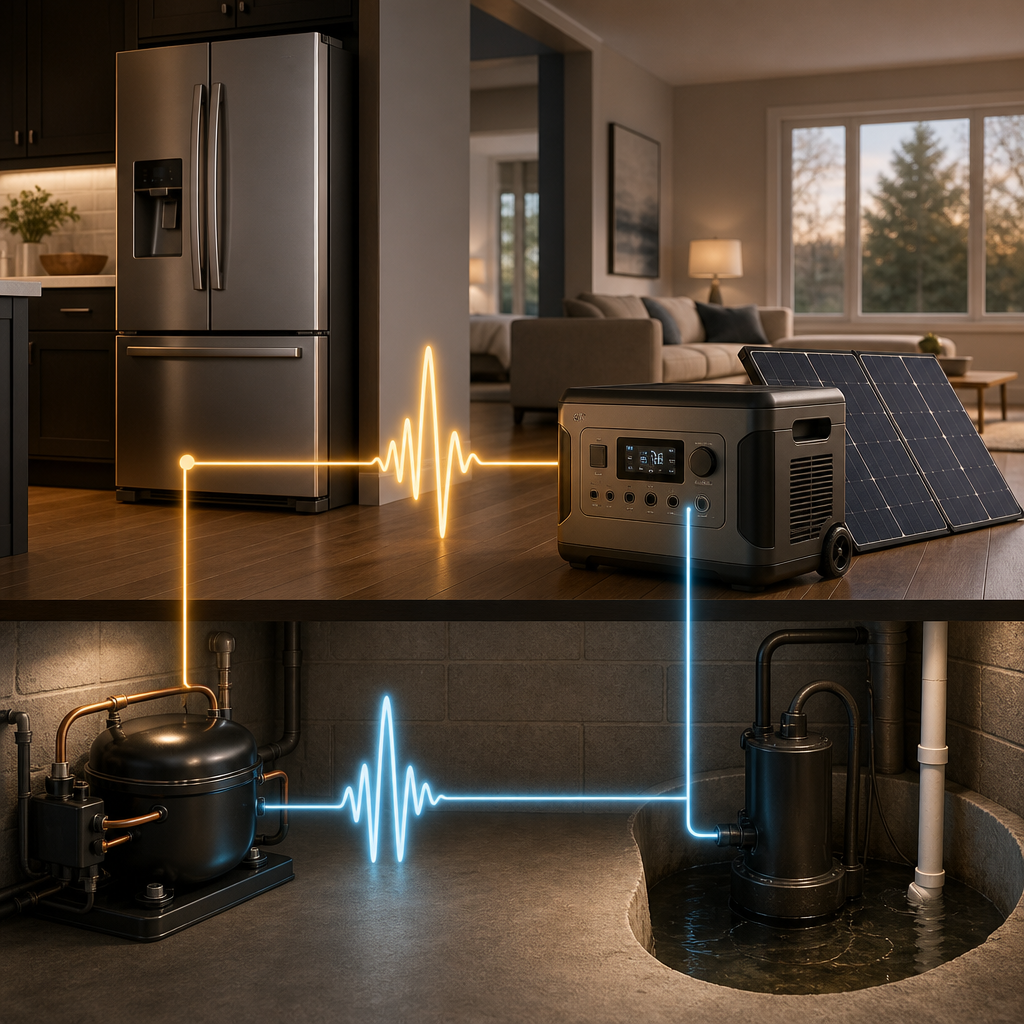
When checking a solar generator’s specifications, look for both continuous output and surge or peak output. The generator should be capable of handling the startup demand of the appliance you plan to connect.
How Long Will a Solar Generator Run Your Home?
Runtime is not determined by battery size alone. A useful estimate is:
Approximate runtime = usable battery capacity ÷ average load
For example, if a system provides 1,800Wh of usable energy and your average load is 300W, the theoretical runtime is about 6 hours. Real-world runtime will usually be somewhat lower because of inverter losses, battery-management limits, temperature, and other factors.
That is why a lower, steady load can dramatically extend an outage. Running a refrigerator in cycles, charging devices in batches, and turning off nonessential electronics overnight can make a meaningful difference. For more everyday efficiency ideas, see simple ways to lower your electricity bills.
How Much Solar Panel Capacity Do You Need?
If you expect an outage to last more than a day, solar recharging can be just as important as battery capacity. A large battery without enough solar input may eventually run empty.
Solar charging depends on panel wattage, sunlight, panel orientation, shading, season, weather, charge-controller limits, and the generator’s maximum solar input. As a simplified example, a 400W solar array does not necessarily deliver 400W for every hour of daylight. Actual daily energy production varies.
For emergency planning, look at the generator’s maximum solar input and compare it with the panel array you intend to use. For broader efficiency ideas, see our home energy-saving upgrades guide. and compare it with the panel array you intend to use. A system that can accept more solar power can recover faster between loads when conditions are favorable.
Should You Try to Power Your Whole House?
For many households, the smarter goal is essential-load backup rather than whole-home backup. Keeping the refrigerator, internet, lights, medical equipment, security devices, and selected outlets operating can require far less energy than trying to run central air conditioning, electric water heating, an electric range, a clothes dryer, and every household circuit.
Whole-home backup is possible with larger battery systems, appropriate transfer equipment, and professional electrical installation. If you plan to connect a battery system directly to home circuits or a panel, work with a qualified electrician and follow local electrical requirements.
What Size Solar Generator Is Best for Different Homes?
Apartment or condo: A 1,000–2,000Wh portable unit may be enough for communication, lighting, refrigeration support, and electronics, depending on building rules and your needs.
Small home: A 2,000–4,000Wh system can provide a useful balance for essential appliances, particularly if you manage loads carefully.
Family home: Consider 3,000–10,000Wh or more when longer runtime and multiple essential loads matter. Inverter output becomes especially important here.
High-demand home: If you have a well pump, sump pump, medical equipment, electric heating, or other large loads, calculate those requirements individually. A modular home battery system may be more appropriate than a portable power station.
5 Common Solar Generator Sizing Mistakes
- Choosing by battery capacity alone. Always check inverter output and surge capability.
- Assuming the refrigerator uses its maximum wattage continuously. Compressors cycle, so actual energy use varies.
- Ignoring startup loads. Motor-driven appliances can need substantially more power for a brief period.
- Planning for one outage hour instead of the whole event. Think about daily energy consumption and recharge opportunities.
- Trying to run everything. Prioritize essential loads first and build from there.
Solar Generator Sizing Checklist
Before buying, answer these questions:
- Which appliances absolutely need power during an outage?
- What are their running watts?
- Which appliances have startup surges?
- How many hours per day will each one operate?
- How many outage days do you want to cover without grid power?
- Can solar panels recharge the battery during the outage?
- Does the inverter have enough continuous and surge output?
- Will you use portable outlets or connect to selected home circuits?
Final Takeaway
The right solar generator for your home is the one that matches your real emergency priorities—not simply the one with the biggest battery. Start by listing essential appliances, calculate their watt-hours, account for startup power, and leave room for real-world losses.
For many U.S. households, a 2,000–4,000Wh portable system is a practical starting point for essential backup. If you are ready to compare actual options, our solar generator review guide can help you evaluate models., while larger homes or longer outages may justify 5,000–10,000Wh or a professionally installed home battery system. The key is to size the complete system—battery, inverter, and solar input—around how you actually live.
Planning ahead also makes outages less stressful. When you know what your generator can run and for how long, you can conserve energy intelligently and keep the most important parts of your home comfortable and connected.
Frequently Asked Questions
Is 2,000Wh enough to run a house?
A 2,000Wh battery is generally not enough to run an entire house normally for an extended period. It can, however, provide valuable essential-load backup when you prioritize refrigeration, lighting, communications, and selected electronics.
How many watts does a house need during a power outage?
It depends on which appliances are operating. An essential-load setup may use a few hundred watts on average, while a typical whole-home load can reach several thousand watts or more when large appliances run together.
Can a solar generator run a refrigerator?
Yes, many solar generators can run a refrigerator, provided the inverter can handle the refrigerator’s startup surge and the battery has enough usable capacity for the desired runtime.
Is a 5,000Wh solar generator enough for a home?
A 5,000Wh system can be a strong emergency backup for essential loads, but whether it is enough depends on your appliances, runtime target, inverter output, and ability to recharge.
How many solar panels do I need for a home solar generator?
The answer depends on the generator’s solar-input limit and your daily energy needs. Check the manufacturer’s maximum solar input and design the panel array around the amount of energy you want to recover each day.

